
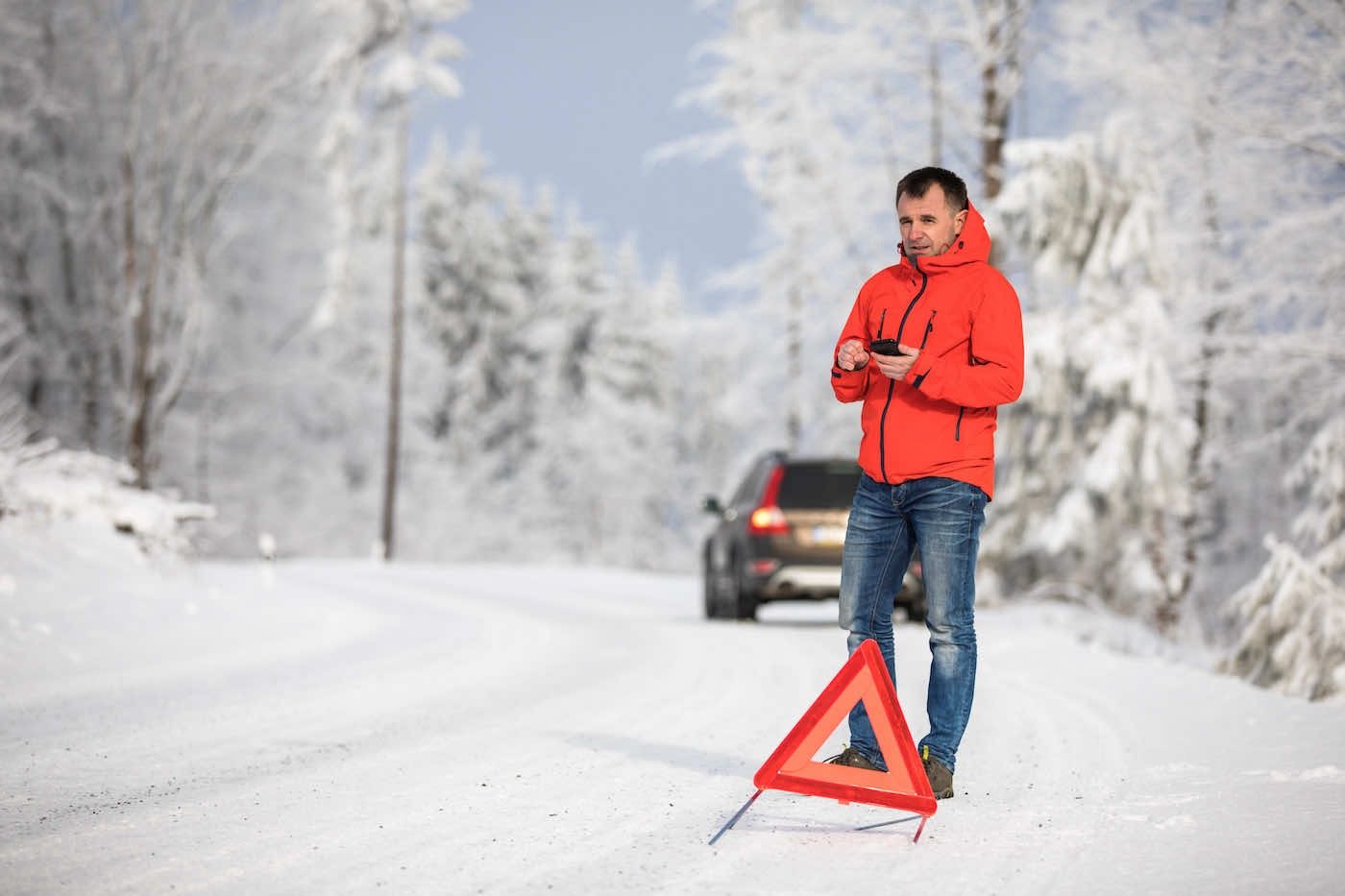
Ran Out of Gas? What Roadside Fuel Delivery Costs and How It Works
If you run out of gas, pull safely out of traffic, turn on your hazards, and call a roadside fuel delivery service. The provider normally brings 2–3 gallons, enough to reach a nearby station, for a typical all-in cost of about $50–$100.
Do not walk along a highway shoulder unless emergency personnel direct you to. A gallon of gas is not worth becoming invisible foot traffic beside 70-mph vehicles.
What to do first
As the engine loses power, signal and use the vehicle's remaining momentum to move as far out of the travel lane as you safely can. Do not make abrupt lane changes. Turn on hazard lights and put the transmission in park once stopped.
Call 911 if the vehicle is blocking a lane, stopped in a place where traffic cannot see it, anyone is injured, or there is smoke, fire, or a fuel leak. For a stable vehicle off the roadway, call roadside assistance or a fuel delivery service.
Give your highway and direction, nearest exit or mile marker, cross street, and a dropped map pin. Describe the vehicle's color and exact position. If you are on a divided highway, “northbound” matters; the provider may otherwise travel miles before finding a safe turnaround.
How fuel delivery works
The dispatcher confirms your location, vehicle, fuel type, price, and estimated arrival. A service vehicle brings a small approved fuel container and transfers enough gas to restart the car and reach a station.
Two or three gallons is common because roadside delivery is emergency assistance, not a mobile fill-up. After fuel is added, the engine may need a few attempts to start while the fuel system primes. Follow the operator's instructions and do not grind the starter continuously.
Once the engine runs normally, drive directly to a station. Accelerate gently and keep an eye on warning lights. If the engine still will not start, the problem may not be an empty tank - or running dry may have exposed a fuel-system issue. You may need a tow.
What it costs
Fuel delivery typically costs $50–$100 all-in for a straightforward local call. The amount may include the service visit and fuel, or the fuel may be listed separately. Distance, time of day, traffic, tolls, and membership coverage can change the price.
Before dispatch, ask:
- Is the fuel included in the quoted total?
- How many gallons will be delivered?
- Is there an after-hours or remote-location charge?
- What payment methods are accepted?
- What is the cancellation fee if the car starts or another provider arrives?
If a tow becomes necessary, request a separate estimate. The towing cost calculator can help you understand a basic towing range.
For local towing and roadside rules, check our state guides. If the problem is a tire instead of fuel, see flat tire with no spare.
Roadside plans may cover the delivery trip but charge for the gasoline, or they may include a limited amount of fuel. Policy terms vary. Ask the plan whether you must use its dispatch network and keep the receipt.
Do not walk to a gas station on the highway
Highway shoulders are narrow, noisy, and full of drivers who may not see a pedestrian until it is too late. Distance is also deceptive: a station visible across the highway may be inaccessible without crossing traffic or walking to a distant interchange.
Wait in the safest available location. If the vehicle is well off the road and there is no safe path away, staying inside with a seat belt fastened may be appropriate. If you can safely move behind a guardrail or far from traffic without crossing a lane, follow directions from highway or emergency personnel. Never stand between your car and approaching traffic.
Keep children and pets controlled. Conserve your phone battery, share your location with a trusted person, and verify the service vehicle before unlocking the door in an isolated area.
Make sure you request the right fuel
Tell dispatch whether the vehicle uses regular gasoline, premium gasoline, or diesel. If you are unsure, check the fuel-door label or owner's manual. Do not guess based on vehicle size.
If diesel was put in a gasoline car - or gasoline in a diesel
Do not start the engine. If it is already running, shut it off in a safe location. The vehicle may need to be towed so the tank and fuel system can be serviced. Adding the correct fuel does not reliably undo the mistake.
Tell the provider that this is a wrong-fuel situation, not an empty tank. That changes the service needed and helps prevent more damage.
If the car smells strongly of fuel
Do not attempt repeated starts. Move people away from the vehicle when it is safe to do so, avoid flames or sparks, and call 911 for a spill, active leak, smoke, or fire.
What if an EV runs out of charge?
An electric vehicle cannot accept gasoline, and portable charging is not universally available. Some roadside providers offer limited mobile charging, but the common equivalent is a flatbed tow to a compatible charging station.
Tell dispatch the make and model, state of charge, location, whether the car can shift into neutral or transport mode, and whether its wheels are accessible. EVs have manufacturer-specific towing procedures; a flatbed keeps all wheels off the road and is commonly required.
Confirm that the destination charger works with the vehicle and is accessible when you arrive. A charger behind a locked gate is merely an illuminated landmark.
Could the gauge be wrong?
An empty reading plus loss of power strongly suggests a fuel problem, but gauges and sending units can fail. If the tank should contain fuel, tell the provider. Other causes - battery, alternator, fuel pump, sensor, or ignition trouble - can resemble an empty-tank stall.
After delivery, do not keep trying to start a vehicle that cranks without catching, leaks, makes unusual sounds, or shows serious warning lights. Arrange a tow to a repair shop.
Prevent the next empty-tank stop
- Refill near one-quarter tank, especially before rural or mountain travel.
- Check the route for long gaps between stations.
- Reset a trip meter after filling if the gauge is unreliable, then repair the gauge.
- Keep roadside coverage and the vehicle's fuel type in your phone notes.
- Check fuel before severe weather, nighttime travel, or holiday drives.
- Do not rely on the estimated “miles to empty” as a promise.
Carrying a spare fuel container inside a passenger vehicle creates spill and vapor risks. If you keep an emergency container, use only an approved product and follow its storage instructions and applicable local rules. A plan to refill earlier is safer.
Roadside checklist
- Move out of traffic and turn on hazards.
- Call 911 if the vehicle is blocking traffic or the scene is dangerous.
- Share exact location and direction of travel.
- Confirm the vehicle's fuel type.
- Get the total price, fuel amount, and ETA.
- Stay out of active lanes while waiting.
- Drive directly to a station after the engine restarts.
- Get a tow if the car still does not run normally.
Frequently asked questions
How much gas will roadside assistance bring?
Usually enough to reach a nearby station, commonly 2–3 gallons. The amount and whether the fuel itself is included depend on the provider or plan.
How much does gas delivery cost?
A straightforward call typically costs about $50–$100 all-in. Remote travel, after-hours service, tolls, or plan terms can change the total.
Will the car start immediately after adding gas?
It may take a few start attempts for the system to prime. Follow the operator's directions. If it does not start promptly or runs poorly, stop trying and consider a tow.
Can police bring me gasoline?
Do not assume they can. Call 911 for an immediate roadway danger; otherwise use roadside assistance. Highway service programs vary by location and may provide limited help.
Does running out of gas damage the car?
Often the car restarts without lasting harm, but running dry can strain fuel-system components or stir debris. Diesel systems may be especially difficult to reprime. Have ongoing symptoms inspected.
When you are out of gas, the safest option is usually bringing fuel to the car - not sending a person down the shoulder with a plastic can.