
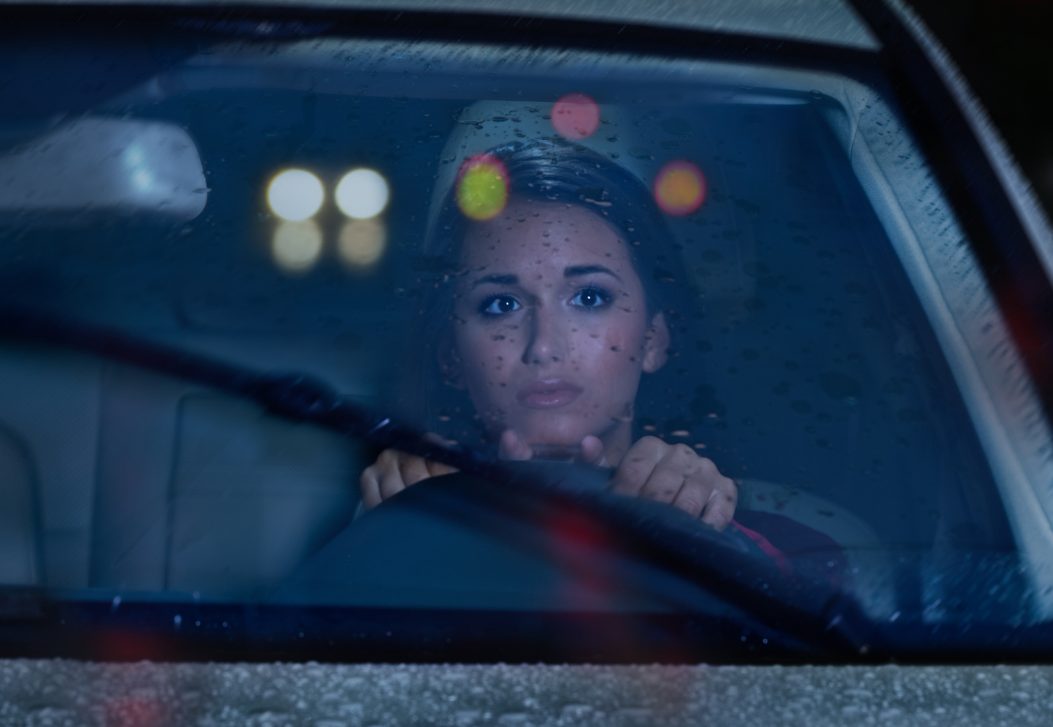
It happens fast - a shape at the edge of your headlights, a thud you feel through the whole car, and then silence while your hands are still gripping the wheel. Wildlife collisions are common on American roads, especially at dusk and dawn on rural and forested routes, and what you do in the next few minutes matters for your safety and your insurance claim alike.
Deer vs Moose: Why the Response Differs
Deer and moose are both common causes of large-animal collisions in the U.S., but they behave differently and the risk to you is not the same.
Deer are lower to the ground, and a collision typically hits the front bumper or lower body of the vehicle. The standard advice for a deer that darts into your path is to brake firmly and stay in your lane - swerving to avoid a deer is a leading cause of far more serious crashes, including head-on collisions or rollovers, because you lose control avoiding an animal that often changes direction unpredictably anyway.
Moose are a different problem entirely. They’re tall, heavy, and long-legged, which means a collision often sends the animal’s body over the hood and into the windshield or roof area rather than absorbing the impact low on the vehicle. This makes moose strikes disproportionately dangerous to occupants compared to deer strikes. In moose country, the priority shifts from “avoid swerving” to reducing your speed in posted wildlife zones, especially at dusk and dawn when moose are most active, so you have more time to react before impact becomes unavoidable.
If a collision is genuinely unavoidable with either animal, aiming for a point behind the path the animal is moving - rather than where it currently is - gives you the best chance of a glancing hit instead of a direct one, since the animal is already moving out of that space.
Prevention: Reducing Your Risk
Most of the useful prevention advice comes down to timing and attention on the right stretches of road:
- Slow down at dusk and dawn, when deer and moose are most active and visibility is lowest.
- Watch for posted wildlife crossing signs and treat them as a real cue to ease off the accelerator, not decoration.
- Scan the shoulders and treeline, not just the road ahead - animals often appear from the sides with little warning.
- Where you see one deer, expect more. Deer frequently travel in small groups; a single animal crossing is often followed by another seconds later.
- Use high beams when it’s legal and safe to do so on unlit rural roads, since they light up the eyeshine of animals well before your low beams would.
Immediately After a Collision
If you’ve just struck a deer, moose, or other large animal, work through this in order:
- Put your hazards on the moment you’re stopped, even if you’re not fully sure the car is drivable.
- Call 911 if anyone is injured, the animal is blocking a live lane, or your vehicle is a road hazard. For a straightforward strike with no injuries and a car that’s safely off the road, 911 isn’t necessary - but you’ll still need to report it (see below).
- Do not approach the animal. An injured deer or moose can be unpredictable and, in the case of a moose, powerful enough to cause serious injury even while down. Keep your distance and let responders or conservation officers handle it.
- Check the vehicle before driving further. If airbags deployed, fluids are leaking, a headlight is out, or the hood won’t latch securely, treat the vehicle as unsafe to drive rather than pushing on to your destination. This is exactly the situation a tow is for - see accident recovery or find a tow truck near you. If the impact pushed you off the road surface, that may call for a winch-out recovery rather than a standard hook-up.
- Photograph everything - vehicle damage, the road position, any skid marks, and the animal if it’s safely visible from a distance. This documentation matters both for your insurance claim and for the incident report. Our accident checklist covers the same documentation habits in more depth if you want the full rundown.
Reporting the Collision
Wildlife collision reporting rules vary by state, so check your local requirements - some jurisdictions require you to report an animal collision to police or a non-emergency line, particularly if there’s significant vehicle damage or the animal remains on the road. If you’re unsure, a call to local police non-emergency or your state roadside information line (511 for road conditions in most states) is a reasonable place to start. Reporting isn’t just a formality - it helps other drivers if the animal or debris is still on the roadway, and it creates a record that supports your insurance claim.
The Insurance Side: Comprehensive, Not Collision
This is the detail that surprises a lot of drivers. An animal strike is generally treated as a comprehensive claim rather than a collision claim on most American policies, since it’s an unavoidable event rather than a driving-related collision in the usual sense. Practically, this matters because comprehensive claims are typically not treated as an at-fault collision for premium purposes the way hitting another vehicle might be - though how any specific claim affects your premium depends on your insurer and policy, so don’t assume; ask when you file.
Regardless of which coverage applies, the general claims process is the same: notify your insurer promptly (most policies expect you to report within about seven days, or “promptly” after the event), keep every receipt including towing and any temporary repairs, and you’re generally free to choose your own repair shop, though your insurer may recommend preferred shops. If the damage is severe enough that repair costs approach or exceed the vehicle’s value, your insurer may declare it a total loss and pay out its Actual Cash Value - the pre-collision market value, not a replacement cost - which you can negotiate using comparable vehicle listings if you think the offer is low. See our guide on how car insurance handles towing for more on what’s typically covered and how to keep the paperwork straight.
If the strike leaves you needing a tow, expect a fairly standard bill - a local tow commonly runs $100–$250 total, more if winching off the roadway is involved. The towing cost calculator gives you a realistic estimate before the truck arrives.
| Step | What to Do |
|---|---|
| At the scene | Hazards on, check for injuries, don’t approach the animal, photograph damage and position |
| Before driving on | Check for airbag deployment, fluid leaks, damaged lights - don’t drive an unsafe vehicle |
| Reporting | Check your state’s rules on reporting animal collisions; call police non-emergency if unsure |
| Insurance | File as a comprehensive claim in most cases; report promptly and keep every receipt |
| If it’s a total loss | Insurer pays Actual Cash Value; you can negotiate with comparable listings |
FAQ
Should I swerve to avoid a deer? Generally no. Braking firmly while staying in your lane is the standard advice - swerving to avoid a deer is a common cause of more serious crashes, including head-on collisions and rollovers.
Why is hitting a moose more dangerous than hitting a deer? Moose are tall and heavy, so a collision often sends their body up and into the windshield or roof area rather than being absorbed by the front of the vehicle. This makes moose strikes significantly more dangerous to occupants, which is why reducing speed in posted moose zones matters so much.
Is a wildlife collision covered by insurance? Generally yes, typically under your comprehensive coverage rather than collision coverage, since it’s treated as an unavoidable event. Confirm with your insurer, since specific policy treatment can vary.
Do I have to report hitting an animal to police? Rules vary by state - some require reporting, especially with significant damage or an animal left on the roadway. When unsure, call local police non-emergency or check your state guidelines.
Is it safe to drive away after hitting a deer if there’s no visible damage? Only if you’ve checked carefully - no fluid leaks, no warning lights, hood latches securely, headlights work, and nothing feels off while driving at low speed nearby. If anything seems wrong, or airbags deployed, treat the vehicle as unsafe and arrange a tow rather than continuing your trip.