
Calling a Tow Truck at 3 A.M.: What "24/7 Towing" Really Means
Yes, a genuine 24/7 towing company can answer and dispatch a truck in the middle of the night. Expect fewer available drivers, potentially longer arrival times, and an after-hours total that is often about 1.2–1.5 times a comparable daytime call.
“Open 24 hours” does not promise a truck in ten minutes. It means the company accepts overnight work, often through an on-call dispatcher and a smaller overnight crew.
How overnight dispatch works
During the day, a towing company may have several trucks moving between scheduled jobs, police calls, repair shops, and roadside pickups. Overnight, one dispatcher may cover a large territory with one or two on-call drivers. A driver may be asleep, returning from another job, or handling a higher-priority crash.
When you call, the dispatcher matches your vehicle and situation with the nearest suitable truck. A flat tire in a safe parking lot may wait behind a collision blocking an interstate. A car in a low garage needs different equipment from an SUV in a ditch.
Give complete information on the first call. If the wrong truck arrives because you forgot to mention all-wheel drive, locked wheels, or a parking-garage clearance, the night becomes longer and more expensive.
What an overnight tow costs
Night and weekend surcharges are normal. A reasonable planning range is roughly 1.2–1.5× a similar daytime service, but providers price calls differently. Some add a separate after-hours fee; others use a higher hookup or minimum charge.
Your total may include:
- Hookup or service-call charge.
- Loaded mileage.
- Travel or deadhead mileage to reach a remote location.
- After-hours, weekend, or holiday surcharge.
- Flatbed, heavy-duty, or specialty-equipment charge.
- Winching, cleanup, storage, tolls, or waiting time.
Ask for the estimated all-in total and the assumptions behind it. Confirm the payment methods accepted at the scene. Our towing cost calculator can give you a baseline, but it cannot see the icy ditch or the locked garage gate.
If law enforcement orders the tow after a crash or hazardous stop, you may have less choice about the provider. Keep the itemized receipt and use our state towing law guides to understand local non-consent rules and complaint options.
How long will the truck take?
An overnight ETA depends on distance, weather, call volume, truck type, and whether the driver is already on a job. Rural coverage can be especially thin. A dispatcher who gives a range and updates you is more credible than one who automatically promises “20 minutes.”
Ask:
- Has a specific driver accepted the call?
- Is the ETA a dispatch estimate or the driver's current estimate?
- Will I receive the truck number or driver contact?
- How will you notify me of a delay?
- Is there a cancellation fee once the driver is on the way?
If you contact more than one company, cancel the others clearly once you commit. Sending several trucks and paying none of them is not a clever way to improve an ETA.
Choose a company in the dark
Stress and a dim phone screen are not ideal research conditions, so focus on a few useful signals:
- The listing specifically indicates 24/7 service.
- Recent reviews mention successful night or weekend calls.
- The dispatcher identifies the company and answers pricing questions directly.
- The company asks about vehicle, drivetrain, damage, location, and destination.
- You receive a written confirmation or text with the quote and truck details.
Be wary of a dispatcher who will not name the towing company, refuses to discuss rates, demands unusual payment before dispatch, or sends an unmarked vehicle. Search our 24-hour towing listings for providers serving your area.
Stay safe while waiting
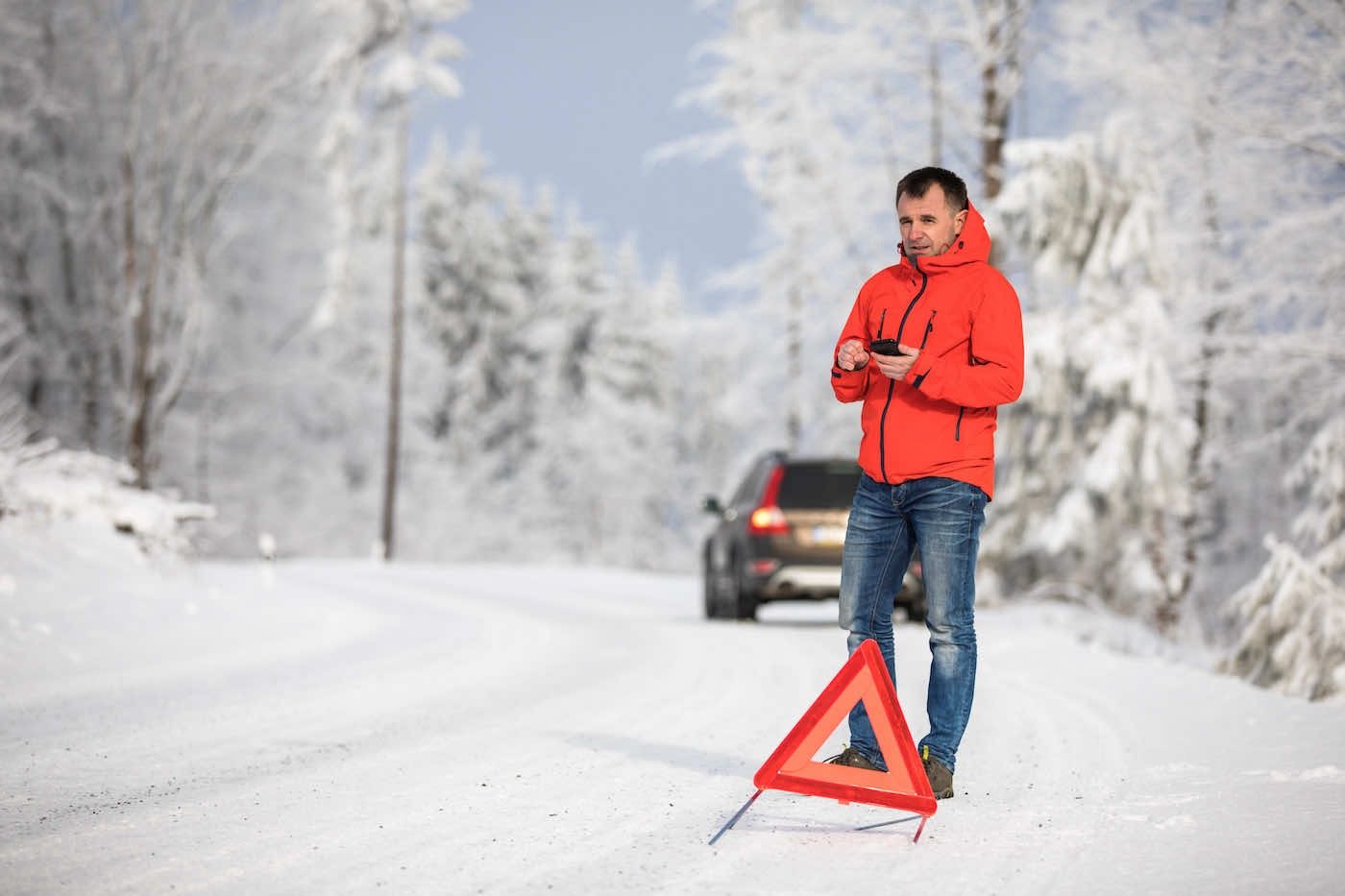
If the vehicle can move, pull as far from active traffic as possible without entering soft ground, a ditch, or another hazard. Turn on hazard lights. On a high-speed road, call 911 if the car is blocking a lane, anyone is injured, or the location is immediately dangerous.
Whether you should remain inside depends on the scene. If the car is well off the road and there is no safe path away from traffic, staying belted inside may reduce exposure. If you can safely move behind a guardrail or far from traffic without crossing lanes, that may be safer. Follow instructions from police, highway personnel, or the dispatcher who can assess the location.
Do not stand beside the traffic-facing side of the car, attempt repairs inches from moving vehicles, or sit on the trunk. Keep children and pets controlled. If you are in an unfamiliar or threatening location, tell dispatch and call 911 for an immediate safety concern.
At night, conserve your phone battery. Lower screen brightness, stop streaming, and share your location with a trusted person. Keep the doors locked when appropriate and verify the arriving truck's company before opening the vehicle.
Information that gets help there faster
Prepare this before calling:
- Highway, direction of travel, nearest exit or mile marker.
- Street address, cross street, landmark, or map pin.
- Vehicle year, make, model, color, and license plate.
- Whether it starts, rolls, steers, and has accessible wheels.
- Drive type if known, especially all-wheel drive.
- Collision damage, flat tires, locked wheels, low clearance, or modifications.
- Whether the vehicle is in a lane, on a shoulder, in a ditch, or inside a garage.
- Your destination.
- Number of passengers, children, pets, and accessibility needs.
Use a landmark the driver can see from the road. “By a tree” has a low success rate in most of America.
Before the truck hooks up
Confirm the company and destination. Ask the operator to explain any major price change before loading. Take photos of the vehicle and remove valuables, toll tags, house keys, garage remotes, and needed medication.
Ask whether you may ride in the truck. Seating and passenger rules vary, and the cab may not accommodate a family. Arrange a ride before the vehicle leaves if necessary.
At delivery, get an itemized receipt showing company name, date, service, mileage, destination, and payment. Roadside plans and insurers commonly need that document for reimbursement.
For a common overnight call that may not need a tow, see roadside fuel delivery.
Night-call checklist
- Move out of traffic if possible and turn on hazards.
- Call 911 for injuries, fire, a blocked lane, or immediate danger.
- Record the location, vehicle details, and problem.
- Confirm the provider offers true overnight dispatch.
- Get the estimated total, ETA, and cancellation terms in writing.
- Verify the arriving truck.
- Photograph the car and keep the receipt.
Frequently asked questions
Are tow trucks more expensive at night?
Often, yes. After-hours totals commonly run about 1.2–1.5 times comparable daytime service, although company pricing and the job itself determine the amount.
Why is the overnight ETA so long?
Fewer drivers cover larger areas, and crashes or roadway hazards may receive priority. Weather, distance, and the need for a particular truck also matter.
Can a tow truck take me home too?
Possibly, but passenger capacity and company rules vary. Ask before booking and mention every passenger, child seat, pet, or accessibility need.
What if the price changes when the truck arrives?
Ask what fact caused the change. Undisclosed damage or extra recovery work can legitimately affect a quote. If the change has no clear basis and the tow is voluntary, do not authorize loading until you understand it.
Does insurance cover a late-night tow?
Time of day usually does not create coverage by itself. A breakdown tow generally requires roadside coverage, while an accident tow may be handled within a covered claim. Limits and reimbursement procedures apply.
A calm, specific call is the best shortcut: exact location, honest vehicle condition, correct truck, written estimate. At 3 a.m., 24-hour towing is real - but it still runs on drivers, distance, and physics.